The Fuente de San Luis terminal is promoting a new technological infrastructure to become a strategic hub in the Mediterranean Corridor

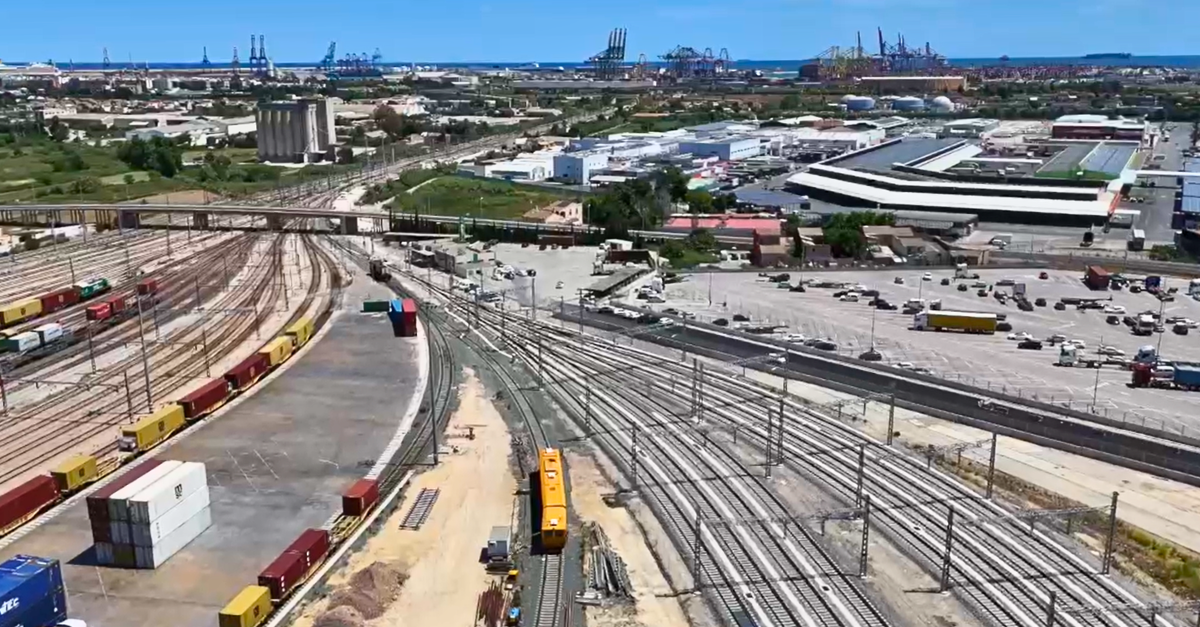

The Fuente de San Luis terminal, managed by the Alonso business group in Valencia, is moving toward a 21st-century terminal model based on automation, 5G connectivity, and operational intelligence. The goal is to optimize logistics efficiency, improve safety, reduce costs, and promote environmental sustainability through a new approach to the last mile of freight transport.
Likewise, the flow of operations has been enhanced with artificial intelligence applied to data management and exception handling, as well as with tools such as Operation Viewer and a self-service kiosk interface for drivers. These interaction points include VoIP intercoms, touch screens, and document printing, enabling more autonomous and efficient management of vehicle entry and exit.
Similarly, the terminal has incorporated automated barriers and traffic control systems that optimize internal circulation. All of this is supported by a digital environment with virtual servers, data centers, central UPS systems, and fiber optic networks, ensuring operational continuity.
High operational capacity in the Mediterranean Corridor
The Fuente de San Luis terminal has an operational capacity that allows it to handle 150,000 TEUs per year, a flow of up to 2,600 trains annually, and a storage capacity of 2,500 TEUs under gantry cranes. The facilities are equipped with four 750-meter tracks for both national and international traffic and two electric gantry cranes with remote control. This is a competitive advantage that strengthens the terminal’s role as a key infrastructure within the Mediterranean Corridor and its connection to the European standard railway gauge (UIC).
In addition to the intermodal terminal, Fuente de San Luis has a parking area for heavy vehicles and a zone designated for real estate logistics developments, as well as a development phase aimed at expanding advanced logistics services. This is a project with a vision of social and economic sustainability, intended to improve the logistics competitiveness of the Mediterranean axis and to facilitate Urban Freight Distribution (UFD) through future specific developments focused on the last mile.
Promotion of a network of terminals in the country