Grupo Alonso’s Global Logistics Project, a unique model of inter-modality in the Iberian Peninsula
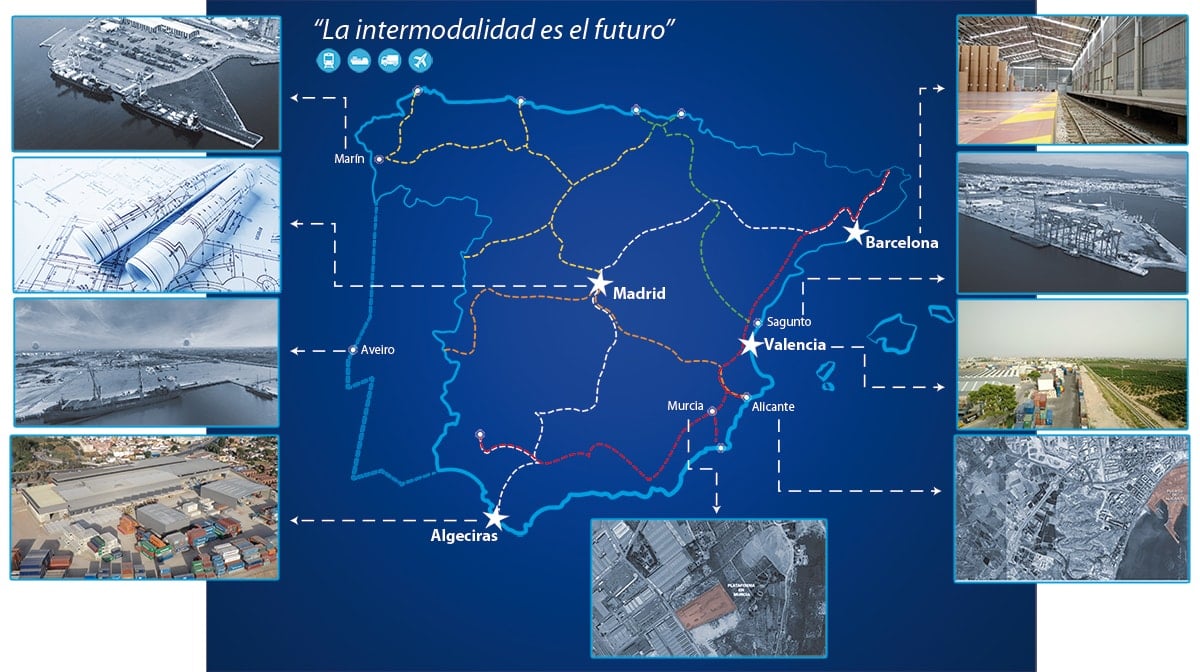
The project will join key maritime traffic spots such as Barcelona, Madrid, Sagunto, Valencia, Alicante, Algeciras, Murcia, Aveiro and Marín before 2025. A unique project in Europe that will connect the over 1.620.000 m2 of facilities that Grupo Alonso is currently preparing and adapting for their future connection by train.
A project based on the railroad
The aim of the Group’s Global Logistics Project is to use the existing railway network, freed up by the High-Speed train (AVE), to take lorries off the road and create multi-client and multi-product trains between its logistics centers, with high reliability and frequency.
A unique model on the European map, spanning the entire Iberian Peninsula, that pursues two main objectives. In the first place, the reduction of transportation costs by providing the customers with a flexible, economic and efficient service; and in the second place, the reduction of pollutant emissions in the search for a higher energy efficiency from the commitment to the environment defended by Grupo Alonso.
A global logistics group
Grupo Alonso’s transport companies, maritime routes, land and maritime terminals, freight companies, customs and auxiliary container services provide the necessary elements to offer complete services.
The concepts of global coverage and integration of the project services make it a unique model in Europe, delivering added value to the customers.
Grupo Alonso firmly believes that the transport model is changing, that inter-modality is the future and that transport shifting from road to rail is going to take place in the short term. The project, at the stage of developing, is co-financed by the European Union’s “Connecting Europe” mechanism (CEF), included in the work program of the year 2015.