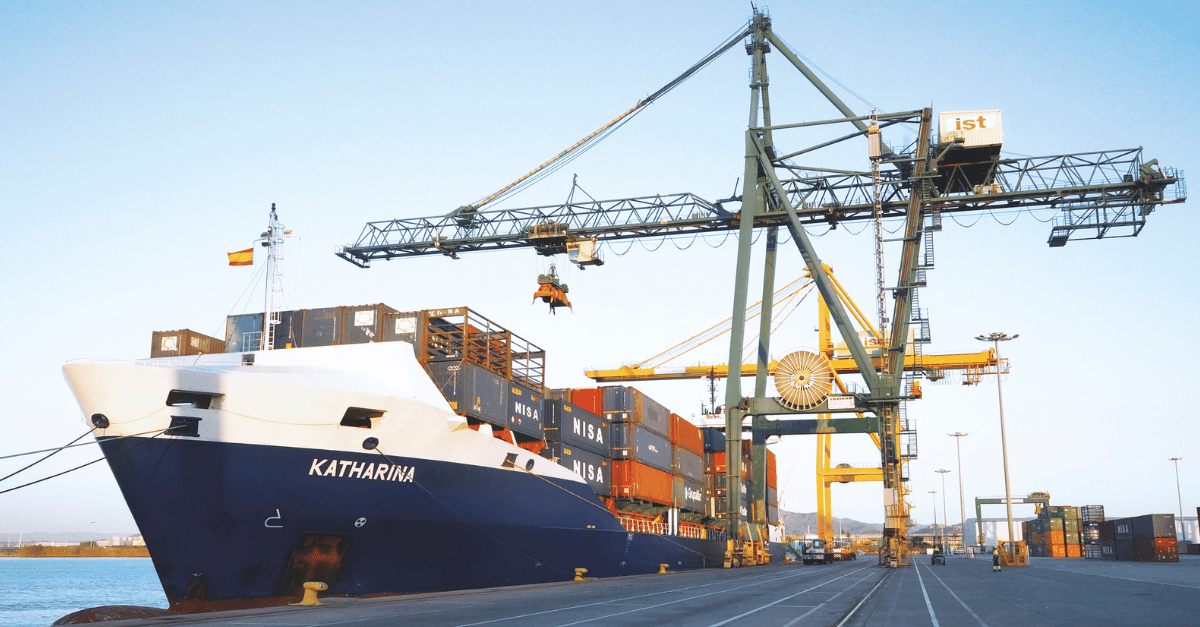
Alonso Group builds new sustainable corporate buildings from shipping containers in Murcia

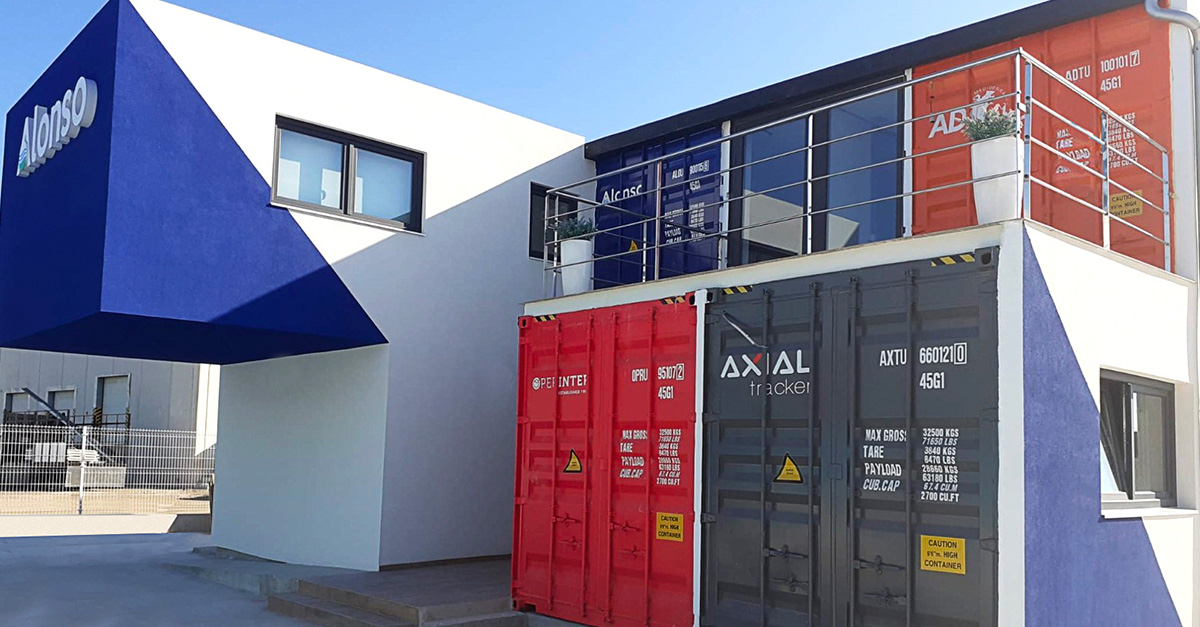
Sustainable construction is once again the main focus of the Alonso Group‘s new buildings. The transformed maritime containers make up the main structure of the building which, on this occasion, has been located in the Alonso Group’s multimodal logistics platform, located in Molina de Segura, in the Region of Murcia.
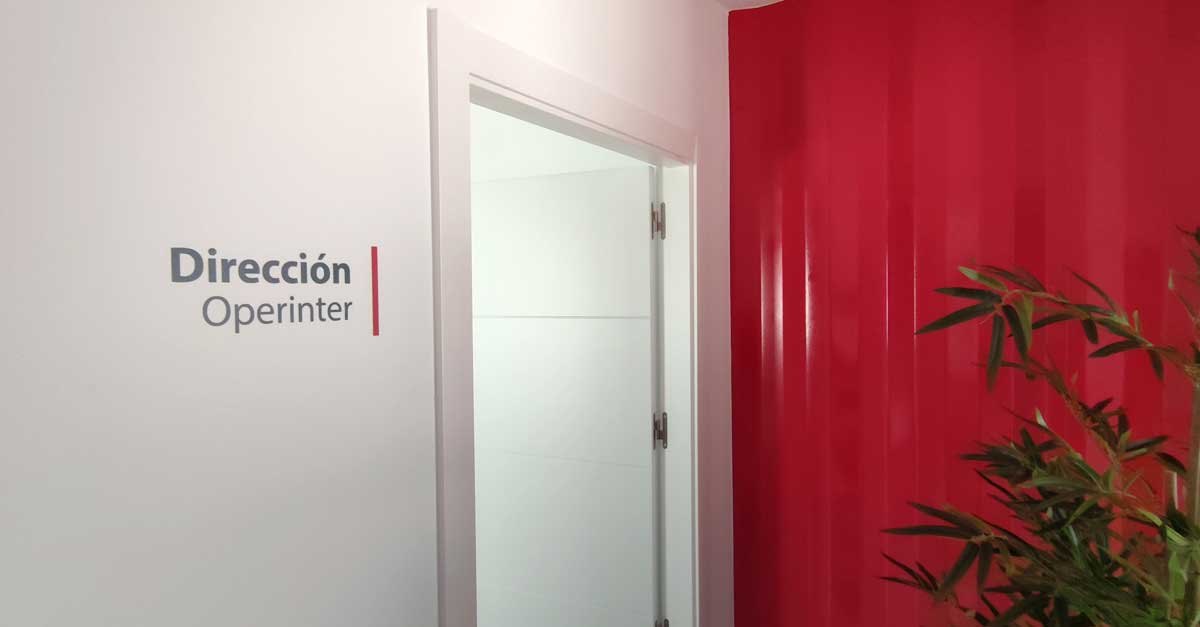
The new corporate building of more than 267 m2 is located inside the platform, which occupies nearly 15,000 m2. It integrates different companies of the logistics and energy division of the Alonso holding company. Among them is ADT Mediterráneo, dedicated to conventional warehousing, groupage and customs goods, as well as the Murcia branch of Operinter. All of them are already using the new building located in the La Serreta Industrial Area in Molina de Segura, which has two floors and a dozen parking spaces.
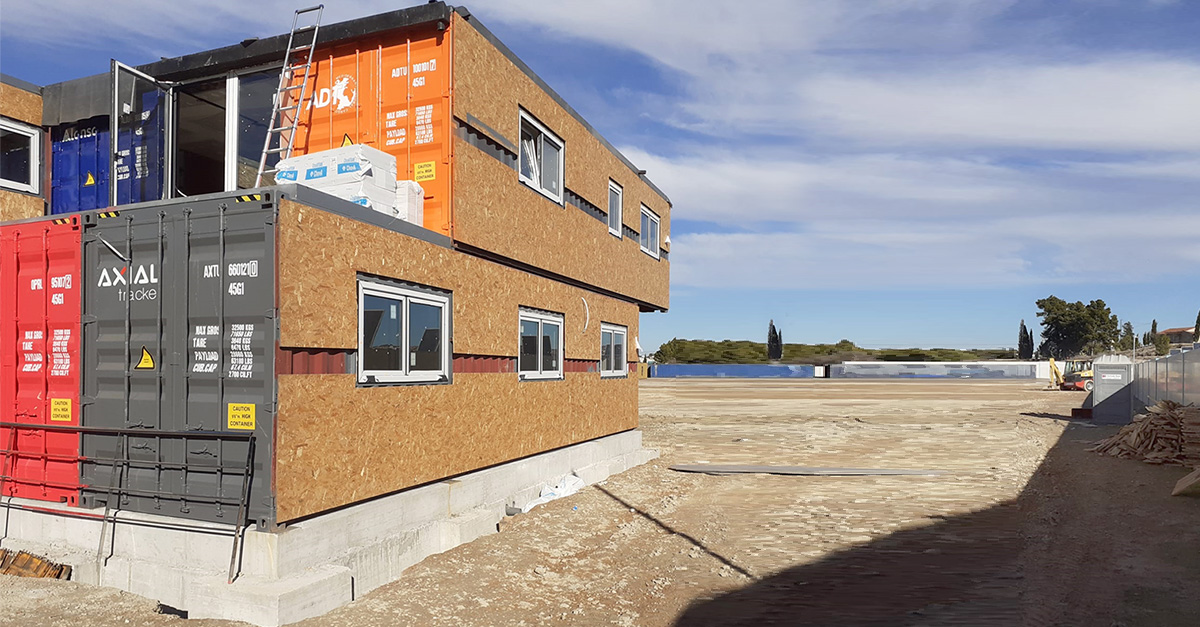
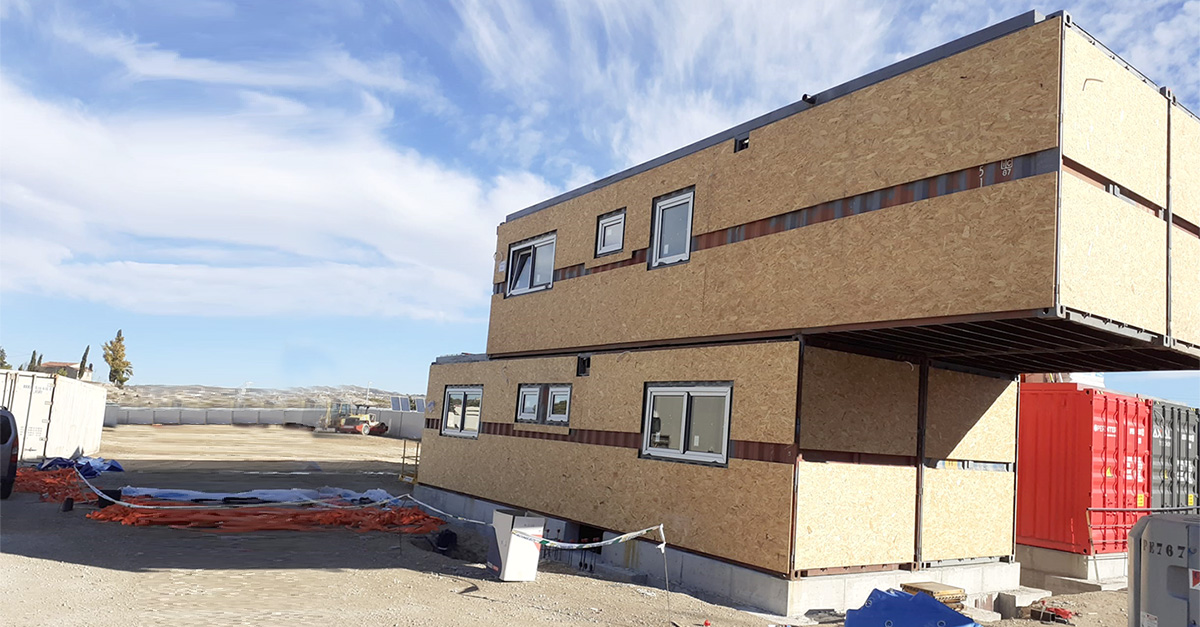
The building, constructed with eight 40-foot and two 20-foot shipping containers, is made up of large open-plan office spaces, offices, meeting rooms and spacious rest areas for professionals in order to meet the needs of employees.




The exterior of the building, following the same corporate esthetic as the rest of the Alonso Group’s buildings, reveals original container doors painted and vinylised in the corporate colours of the holding’s companies. An original, fresh and striking touch that adds identity to the group’s corporate buildings.
The design, structural calculation and construction work was carried out by Alonso Group professionals and the result is an eye-catching building thanks to the play achieved in the structural composition. A formula that has made it possible to create striking terraces and overhangs that give the building its own unique personality.


Sustainable construction from start to finish
The new corporate building is fully sustainable from the start. The fact that it has been built using recyclable and reusable shipping containers reduces the use of other materials, avoids the impact on the environment where they are located and means less energy is used during construction compared to a traditional building site. This avoids the environmental impact of the construction process and facilitates assembly and disassembly.
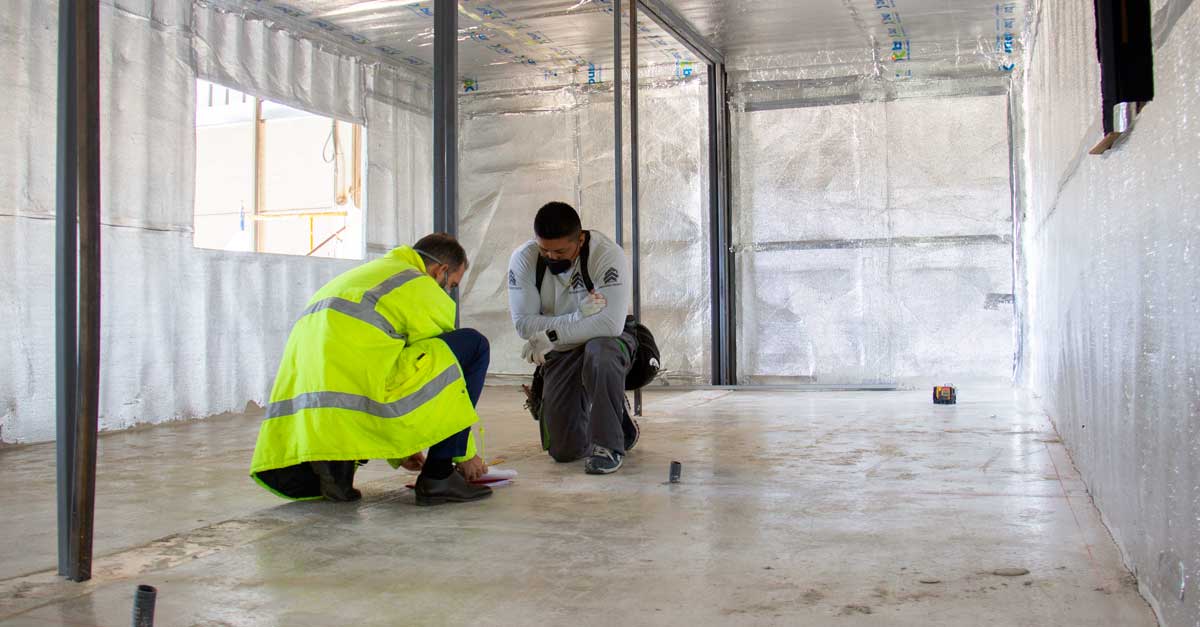
The construction from ISO Maritime Containers is an economical and fast way that has important advantages in terms of execution time, construction and effects on the environment. In addition, the building envelope has been protected by a multi-layer system with exterior and interior insulation, resulting in a highly energy-efficient building. In addition, all rooms have been provided with natural lighting and the artificial lighting has been implemented with LED technology, with low electricity consumption.
Chronology of the project
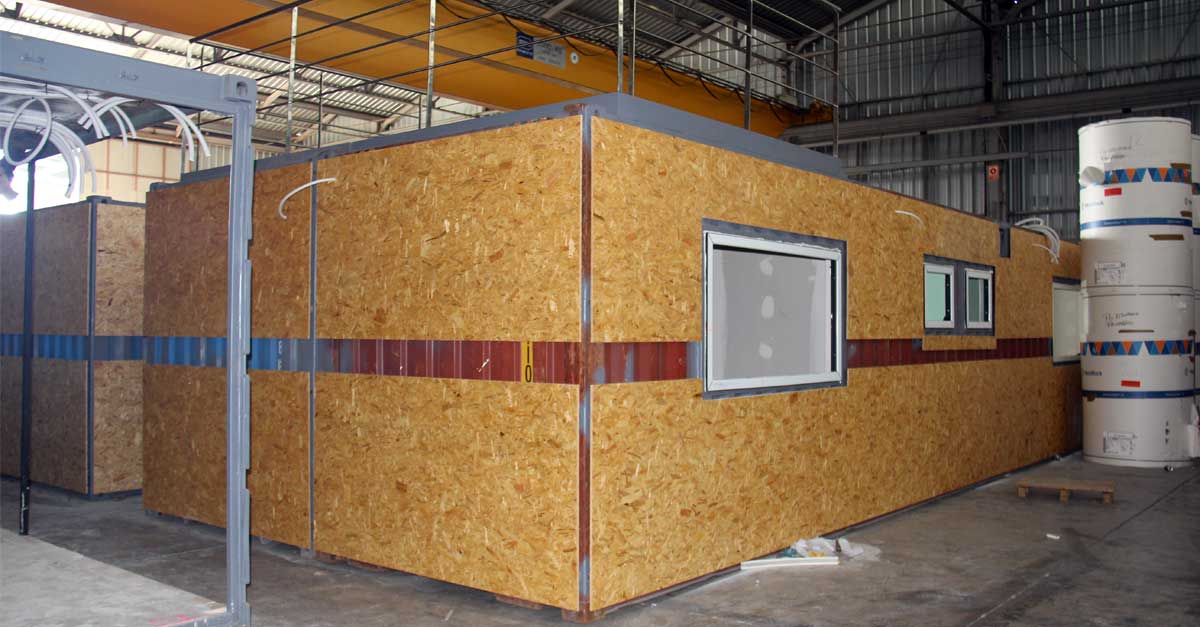
The execution of the work began in July 2020 with the transformation of the containers in TYMSA‘s workshops and their subsequent transfer to SETEMAR‘s warehouses to carry out the interior fitting out work.
At the end of 2020, the foundations were laid in the ground and, finally, in January, the transformed and already equipped containers were moved. This last phase is undoubtedly the most delicate moment of the entire project. Everything that has been executed in the workshop must be assembled on site and must fit together like a puzzle so that the final result is as planned.
Involvement of several Alonso Group companies
Up to six holding companies have been involved in this important project, which demonstrates the synergy and coordination within the Alonso Group. This is already the second corporate building, after the location of the land transport division in the port of Valencia. These facilities were commissioned in May 2020 and stand out for their originality, efficiency and allegory of cooperation in the maritime sector.
An example of coordination and efficiency, to achieve a new environmentally friendly project, a hallmark of the holding company, integrated in the Alonso Group’s Global Logistics Plan recognised by the European Union through the “Connecting Europe” mechanism.